

The best forex robots are trading tools that follow set rules to buy and sell currencies. They watch price changes, find trade setups, and place orders without the trader having to click each time. Still, no robot can promise steady profits.
Forex robots are useful for traders who want to follow a clear plan. Some trade during strong trends, while others look for small price moves. Most use chart data and tools from technical analysis of financial markets to make trading decisions.
Before choosing a forex bot, it is important to know what it does, how much it costs, and what could go wrong.
What Is a Forex Trading Robot?
A forex trading robot is a computer program that can place trades based on set conditions. Many robots are called Expert Advisors (EAs) and run on MetaTrader 4 or MetaTrader 5.
Traders choose the settings, and the software follows them when trading is enabled.
For example, a robot may buy EUR/USD when prices start moving upward. It may close the trade when the price reaches a set target or falls to a stop-loss level.
A stop-loss aims to limit losses, while a take-profit order closes a trade at a chosen target. Both tools help manage trades, but they cannot prevent every loss.
How Do the Best Forex Robots Work?
Most robots work through a simple process. They check the market, look for a valid setup, and act when their rules are met.
A forex bot may use moving averages, price levels, or other indicators to spot trading opportunities.
Some robots only send alerts. Others place and manage trades on their own.
An automated forex trading system can follow the same rules each time. This can reduce manual work, but it also means the robot may keep trading when market conditions change.
Popular Types of Forex Trading Robots
Different robots follow different trading methods. The best choice depends on the market you trade and the risks you can accept.
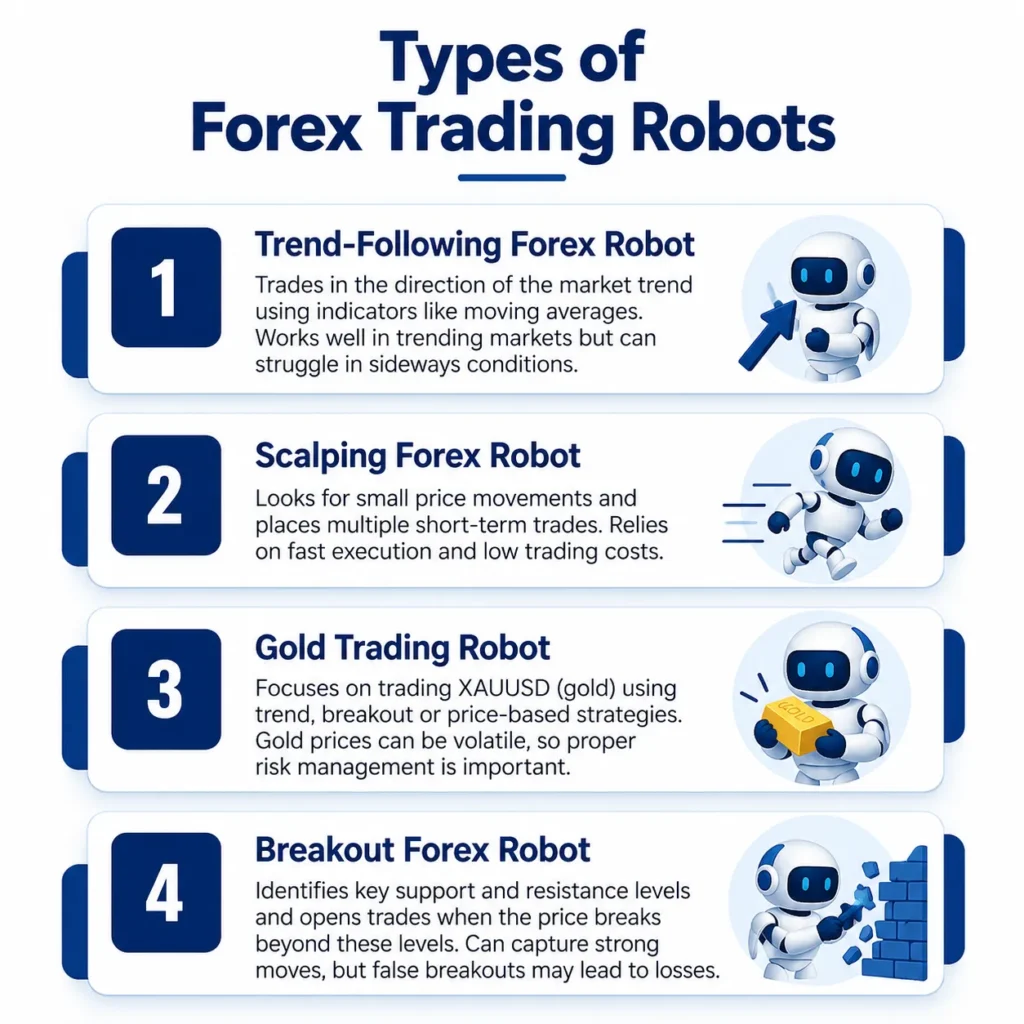
1. Trend-Following Forex Robot
This type of robot looks for a clear market direction. It may buy during an upward trend or sell during a downward trend.
Trend robots can face problems when prices stop moving in one direction. Sudden trend changes may also lead to losses.
2. Forex Scalping Robot
A scalping robot tries to trade small price movements over short periods.
It may place trades often, so spreads, broker fees, and order speed matter. Even small delays can change the result of a trade.
3. Gold Trading Robot
A gold bot focuses on XAUUSD, which tracks gold prices against the US dollar.
These robots may trade trends, breakouts, or short price moves. A Gold EA follows automated trading rules made for the gold market.
Gold prices can change quickly during major news events. This makes risk controls important.
4. Breakout Forex Robot
A breakout robot looks for prices moving past key support or resistance levels.
It may open a trade when a price breaks above or below a chosen level. However, the price may return to its earlier range and trigger a loss.
How to Choose the Best Forex Robots
Finding the best robot for forex trading is not just about buying popular software. Traders should check how the robot works before using real money.
Review Trading Records
Look for a clear history of both winning and losing trades.
Some sellers show only their best results. A useful trading record should also show losses, trading costs, and periods when the system performed poorly.
Check Features and Risk Settings
A good forex robot should offer settings that fit your trading plan.
Important features include:
-
- Stop-loss and take-profit controls
-
- Adjustable trade sizes
-
- Demo account support
-
- Clear trading rules
-
- Compatibility with your broker
-
- Options to pause automated trading
The robot should also suit your preferred forex trading strategies and market conditions.
Compare Free and Paid Forex Robots
A free forex robot may have fewer features or limited support.
Paid robots may include updates, extra settings, or customer service. Some require a one-time payment, while others charge a regular fee.
Higher prices do not always mean better software. Traders should also consider spreads, commissions, and any hosting costs.
Benefits and Risks of Robot Trading Forex
A forex robot trader can watch markets, follow preset rules, and place trades without constant manual input.
It may also reduce emotional trading decisions because the software follows its own instructions.
However, an automation trading bot still carries risks.
-
- Market changes: A strategy may stop working when prices behave differently.
-
- High leverage: Large positions can cause serious losses.
-
- Software issues: Poor connections or wrong settings can affect trades.
-
- Trading costs: Spreads and fees can reduce profits.
-
- False claims: Some sellers may promote results that cannot be verified.
Robots do not feel fear or greed, but their users still do. The principles of trading psychology remain important when deciding whether to change settings or stop a system.
How to Test a Forex Bot Before Live Trading
Testing can reveal how a robot behaves before real money is involved.
Start by reading its trading rules. Then test it with past price data, a process known as backtesting.
After that, run the robot on a demo account. Watch how it opens trades, handles losses, and reacts to price changes.
Check whether the results match your risk limits. Keep in mind that past data and demo trading cannot fully reflect live market conditions.
Conclusion
The best forex robots are those whose trading rules, costs, and risk settings fit a trader’s needs. They can save time and make trading more systematic, but they cannot ensure profits.
Before using a forex bot, check its trading method, test its settings, and keep risk under control.
While robots can place trades on their own, using free forex signals involves reviewing trade ideas before acting on them. Both methods need careful market analysis and a clear trading plan.
Frequently Asked Questions
Some robots can make profitable trades, but they can also lose money. Results depend on the strategy, market conditions, fees, and risk settings.
Yes. Beginners can use forex robots, but they should understand basic trading concepts and practise on demo accounts before trading live.
Not always. Both free and paid robots can have strengths and limits. Trading rules, risk controls, and clear records matter more than price alone.
A compatible robot can monitor markets while its platform is running. However, forex trading hours, broker restrictions, and technical issues can affect its operation.