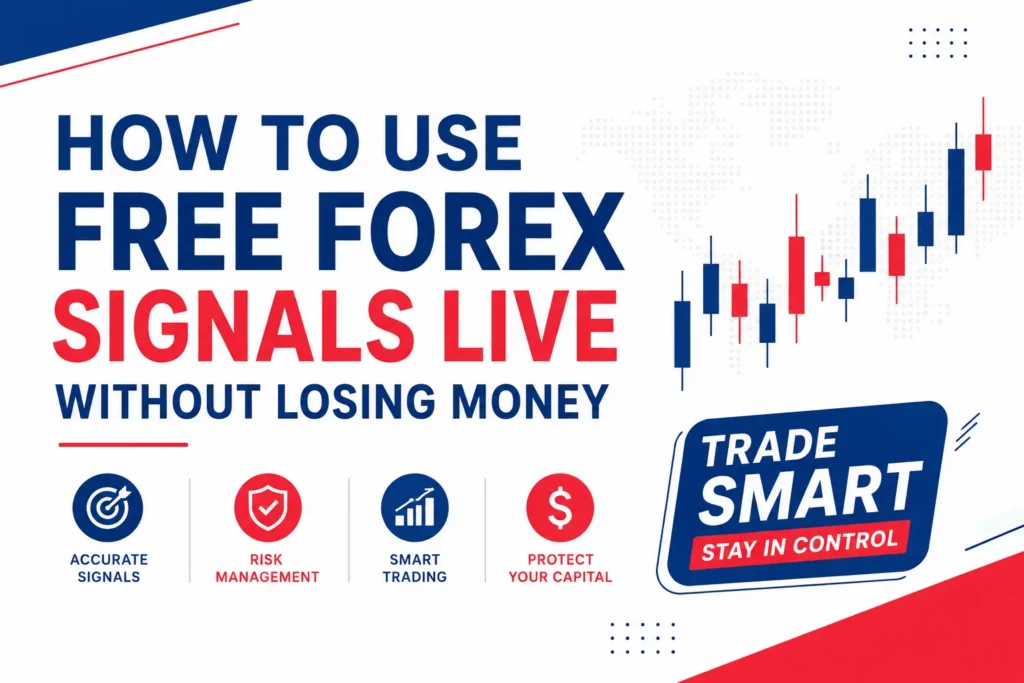
Trading isn’t an easy task to perform; it involves analysing charts, planning trades, capital distribution, and whatnot. This is one of the main reasons traders get attracted to free forex signals, as it provides them with trade ideas without the need to monitor the market for hours. These signals can include the entry points, stop-loss levels, and profit targets too, making trading simpler.
However, many traders misunderstand that signals are solely responsible for generating profits. The reality is different, though; signals can be a valuable tool if used correctly. But relying on them is not advised. Due to this misconception, many traders face losses as well.
To make use of these signals well, the key is understanding how to evaluate, filter, and execute them responsibly. This guide explains how to use free forex signals live more effectively while reducing the mistakes that often lead to unnecessary losses. So, let’s dive in!
What Are Free Forex Signals and Why Are They Popular?
The trade recommendation that suggests when to buy or sell a currency pair is known as a forex signal. They are usually generated by analysts, trading systems, or market research teams.
They are popular among traders as they bring convenience. This means instead of spending hours watching charts, traders get alerts highlighting possible opportunities.
Many signal providers offer forex trading signals for free through websites, messaging platforms, mobile applications, and trading communities. These alerts often include:
- Currency pair
- Entry price
- Stop-loss level
- Take-profit target
- Market direction
The growing demand for free signals in forex has made signal services widely available. While this accessibility is beneficial, it also means that quality can vary significantly between providers.
The Biggest Reasons Traders Lose Money Using Signals
Signals by themselves don’t automatically “hurt” you. In practice, most losses come from the way traders apply them, or how they interpret what they see.
Still, it’s normal to rush straight in, and that’s where things get messy. Like, you might think a signal is enough, but it’s never that clean.
Following Every Signal Without Any Check
A really common error is treating every signal as if it’s guaranteed to work. Nobody, no matter how good they claim to be, can deliver a perfect win ratio all the time.
Also, the market is not a static painting. It shifts with economic changes, with investor moods, and with surprising events. A trade idea that looked solid an hour ago can become shaky by the moment you actually click “enter.”
So if you blindly copy every suggestion, you will often end up losing money gradually, not all at once.
Ignoring Market Conditions
A signal should always be held up against what the market is doing right now.
For instance, the signal might tell you to buy a currency pair. But if major economic news is coming up within minutes, then spreads can widen, prices can jump, and the whole situation can change fast.
When you understand the current conditions, you’re less likely to start a position during unstable periods, which is usually where the unpleasant surprises live.
Poor Risk Management
Even the best signal can still miss.
Many people end up increasing their lot size after a couple of wins, basically assuming the good streak will keep running forever. Then, when the first real loss arrives, it can wipe out several earlier gains, pretty quickly.
So, risk management remains one of the most crucial parts of trading long-term, even when your signals look very strong.
How to Evaluate a Good Forex Signal Provider
Not all signal providers run with the same level of openness, or reliability, really. Some people act like everything is crystal clear, but then you find gaps.
Look for Verified Performance
A strong forex signal provider should, you know, openly show performance records and a trading journal or history. Consistency tends to matter more than those occasional big wins. The better ones usually lean into steady outcomes instead of selling unrealistic promises.
Review Risk-to-Reward Ratios
The signals should come with balanced risk control, not just “go big” vibes. If a provider keeps risking way more than the possible payoff, long-term profit becomes rough even when the win rate looks okay on paper.
Assess Communication Quality
Professional providers usually share information fast and in a clear way. A signal should include the stuff you can actually act on, like entry level, stop-loss placement, profit target, and a short trade rationale. If those instructions are missing or the details are vague, it can lead to confusion, plus execution mistakes later on.
Watch for Red Flags
Be careful with providers that:
- Guarantee profits
- Claim near perfect accuracy
- Hide their performance history
- Encourage excessive trading activity
These warning signs often point to an unreliable service, even if the marketing sounds smooth at first.
Why Live Forex Signals Require Additional Caution
Live forex signals offer real-time chances that come from what the market is doing right now. Sure, that sounds helpful, but it also brings its own kind of danger, not exactly the same as usual trading.
Timing is everything
A signal might be profitable only if you actually enter, within a certain price band.
And if your execution slips even a bit, the market may move a lot, which can quietly flip the whole risk setup of that position.
So don’t go trying to chase the entry just because you sort of missed it. That habit usually ends up turning “good timing” into “random timing”.
Market Volatility Can Rewrite the Rules
Fast price swings can show up during:
- Central bank announcements
- Employment reports
- Inflation releases
- Geopolitical developments
Those headline moments can cause sudden movement, and then the signal performance won’t match what you expected before.
Being a bit selective, especially during these high-noise times, is one way to help guard your trading capital.
How to Use Free Forex Signals Live More Effectively
In general, strong traders use signals like instruments, not like automatic commands.
Build your own checking routine
Before taking any trade, do a quick validation step, something like:
- Look at the wider market trend
- Review the recent price movement
- Verify key support and resistance areas
- Also, consider what economic events are coming soon
This helps you see whether the signal really fits what the market is currently saying.
Prioritize quality over sheer volume
A lot of traders think, “more signals = more opportunities.”
But in real life, too many trades often mean more mistakes and more risk exposure by default.
Choosing only the best setups tends to improve steadiness, and it can lower the number of needless losses.
Keep records of Results
Keeping a trading journal helps you spot patterns over time, not just feelings.
Track:
- Winning trades
- Losing trades
- Signal source
- Market conditions
- Your entry and exit decisions
Then do regular reviews. Over time, you’ll notice where you execute well, and where the process quietly breaks down.
The Role of Forex Indicators When Using Signals
A lot of seasoned traders treat forex indicators like a sideways “check” before they actually commit to a trade, ya know. In other words, they use them as confirmation tools, not as the full story.
Indicators really shouldn’t replace real analysis, but when you use them the right way, they can add a bit more certainty, or “extra reassurance” before you act.
Trend confirmation
When a signal matches the current market direction, the odds often look better, even if nothing is guaranteed. Also, trend confirmation can help traders avoid taking positions that fight strong market momentum because going against that can be rough.
Momentum confirmation
Momentum tools can show whether the price movement actually backs up the signal’s direction, not just the signal itself. If momentum and the signal line up together, then traders may feel more confident about the entire setup.
Volatility assessment
Volatility matters a lot since it changes how far you can place stop-loss orders and what profit potential is realistically on the table. Using confirmation methods can help you see if current conditions really support what the signal is trying to achieve.
Choosing the Best FX Broker for Signal Trading
Broker selection also matters a lot for signal execution.
Even if the forex signal itself is solid, it can still fall flat when the execution quality is unreliable. That’s where a broker’s infrastructure really shows up.
Fast order execution
Live signals usually need a timely entry. If there’s any kind of delay, it can lead to worse entry prices, less profit potential, and more risk exposure. With faster execution, trade accuracy stays closer to what the signal intended.
Competitive trading costs
Spreads and commissions can eat into returns over time. When trading costs are lower, traders keep more of their gains, instead of letting fees take a big share.
Platform stability
A dependable platform reduces disruptions during major market moments. So when people look for the best FX broker, they should weigh things like regulatory oversight, platform performance, customer support, and pricing clarity. Together, these factors create a more stable and dependable trading environment.
Comparing Free Forex Signals and Premium Alternatives
Forex signal for free kind of brings a few benefits, like there’s no real upfront commitment, it’s easier access, you can try the provider first without drama, and you can judge service quality in a more direct way, not just by claims. For new folks and even people already trading, those perks can feel pretty appealing.
But there are also limitations with free services; some free providers may give limited support, fewer updates, delayed notifications, or analysis that’s less detailed than what you’d expect.
Premium options might include extra resources and faster back-and-forth communication, yet paying more doesn’t automatically mean the results will be better. The provider quality is still the bigger factor, not the subscription price.
| Feature | Free Forex Signals | Premium Forex Signals |
| Cost | Free | Subscription-based |
| Support | Limited | Usually dedicated |
| Signal Frequency | Varies | More consistent |
| Analysis Detail | Basic | More comprehensive |
| Accountability | Lower | Generally higher |
Practical Risk Management Rules That Help Prevent Losses
Risk management is, honestly, the strongest protection against trading losses.
Risk only a small percentage per trade
A lot of experienced traders cap how much they risk on each position, basically keeping exposure under control. This kind of setup helps stop one bad outcome from bruising the entire account too badly.
Use stop loss orders consistently
Stop-loss levels are there to manage the downside. When people ignore stop loss rules, smaller issues can slowly turn into major setbacks, and that’s when accounts start taking heavier damage.
Don’t trade with emotions
Emotions often push traders into bad choices. You’ll see patterns like revenge trading, increasing the position size after a loss, chasing missed moves, or jumping into trades without proper confirmation. Staying disciplined helps you make decisions that are more repeatable and less random.
Aim for long-term consistency
Even successful traders know losses happen. The point is not that every single trade must be a winner, but that you keep managing risk well, and you look for the better setups over time, again and again.
Common Mistakes Traders Should Avoid
A bunch of recurring mistakes can quietly, and yes, reduce the usefulness of trading signals, even if the alerts look great on the surface.
Copying Every Signal
Seriously, not every signal should turn into an order.
Sometimes, picking and choosing, selective decision-making, works out much better than just following every single recommendation, no matter what.
Ignoring Risk Controls
You should not trade away risk management just because the idea of larger profits feels tempting.
Keeping your capital protected helps traders stay in the game, so they can act again when the next opportunity shows up.
Trading During Major Uncertainty
When the market is in extreme volatility, conditions can get weird, fast, and not in a predictable way.
Pausing and waiting for clearer signals might be the more tactical route, even if it feels a little less exciting.
Expecting Signals to Guarantee Profits
No signal source can remove market risk entirely.
If you treat signals as solid guidance, not as certainty, you end up with more realistic expectations and cleaner decision-making.
| Common Mistake | Potential Impact |
| Following every signal | Increased losing trades |
| Ignoring market conditions | Poor trade timing |
| Overleveraging positions | Larger account drawdowns |
| Skipping stop-loss orders | Uncontrolled losses |
| Emotional trading | Inconsistent results |
Conclusion
Free forex signals can actually be useful, but only when they’re folded into a disciplined trading process. The top traders typically do not depend only on alerts. They confirm ideas, control risk tightly, and lean into consistency instead of chasing quick wins. Whether you’re using live forex signals or testing a new provider, the priority should stay the same: capital preservation first. By choosing a reliable signal source, using confirmation tools, and keeping strict risk limits, traders can cut down avoidable losses and make more informed market calls.
Want dependable market opportunities without all the guessing? FX Signals offers free trading signals, real-time market insights, and expert analysis from a trusted signal provider. It’s designed to help you move through the forex market with more confidence and discipline.
Frequently Asked Questions
Free forex signals can be useful, but their quality varies by provider. Traders should check performance history, risk-to-reward ratios, communication quality, and transparency before following any signal.
Yes. Beginners can use free forex signals as a learning and decision-support tool. However, they should avoid copying trades blindly and should understand basic risk management, stop-loss placement, and market conditions first.
Use signals only after checking the market trend, support and resistance, upcoming economic news, and the suggested risk level. Always use a stop-loss and avoid risking too much capital on a single trade.
No. No forex signal can guarantee profits because market conditions can change quickly. Signals should be treated as trade ideas, not guaranteed outcomes. Risk management is still necessary on every position.
A useful forex signal should normally include the currency pair, buy or sell direction, entry price, stop-loss level, take-profit target, and ideally a short explanation of the trade setup.
Not necessarily. Paid services may offer more detailed analysis, faster updates, or better support, but payment does not guarantee better performance. Provider transparency, consistency, and risk control matter more than price.